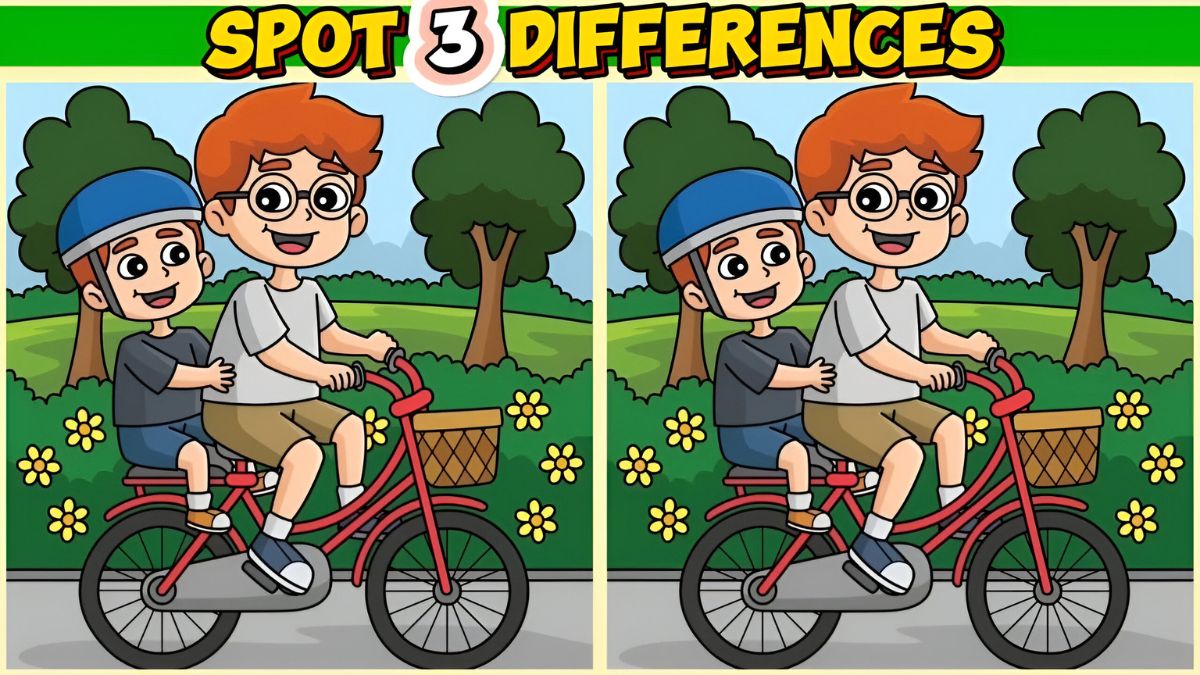
In today’s fast-paced lifestyle, where much of our time is spent on mobile phones, TVs, and social media, small but powerful brain exercises are not only a source of entertainment but also enhance our cognitive abilities. One such fun brain game is the “Spot the 3 Differences” puzzle. In this game, the two images shown above appear almost identical—a father and his child riding a bicycle in a park. At first glance, the pictures look the same, but if you look closely, some subtle differences are hidden between them. Finding these differences is the real fun of this puzzle.
The Scene in the Picture: A Wonderful Blend of Simplicity and Joy
This picture depicts a beautiful moment where a father is giving his child a bicycle ride in a park. Lush greenery surrounds them, including trees, colorful flowers, and a serene atmosphere. The father has a smile on his face, and the child also looks very excited. This picture is not just a medium for a game but also a symbol of love between family members, time spent together, and being close to nature. Such pictures foster positive emotions in children and remind adults of their own childhood.
The Real Purpose of the “Spot the Difference” Game
Beyond mere entertainment, these puzzles serve an important function—they act as exercise for our brains. When we carefully examine two almost identical pictures, our brain becomes active in identifying every small difference. This type of training makes the brain sharper and more alert. For children, it’s a learning aid, while for adults, it’s an activity that reduces mental stress and keeps the mind active.
Small Differences, Big Impact
Three subtle differences are hidden in these pictures. These differences could be in the number of flowers, the color of a part, or small changes in a part of the bicycle. These small differences are what make it challenging. When the player finds them, they experience a feeling of joy and satisfaction. This feeling boosts confidence and motivates the brain to stay more active.
Beneficial for Children’s Mental Development
These types of puzzles are extremely beneficial for children. They not only sharpen their attention span but also teach them patience. It’s commonly observed that children quickly lose interest in activities, but these picture puzzles keep them engaged and captivated for extended periods. If parents also participate in the game with their children, it helps strengthen family bonds. The process of asking questions, reasoning, and finding answers makes children smarter.
An Easy Way to Reduce Stress for Adults
It would be wrong to think that this game is only for children. In fact, these puzzles are just as useful for adults. Amidst work pressure, mental stress, and daily worries, focusing on such pictures for a few minutes provides relaxation to the mind. It’s a form of mindfulness, where a person is fully present in the moment and detached from other concerns.
A Fun Way to Make Family Time Enjoyable
“Spot the differences” puzzles can be a great opportunity for the whole family. Children, parents, and grandparents can all participate. Everyone tries to find the differences from their own perspective, and when someone finds the correct answer, a wave of joy spreads through the atmosphere. It not only provides entertainment but also enhances family bonding and communication.
Conclusion: A Simple Game, Profound Impact
At first glance, this picture may seem simple, but the real game engages both the mind and the heart. Puzzles like “Spot the 3 Differences” teach us the importance of paying attention to small details in life. These games demonstrate the value of patience, concentration, and fun. Whether you are a child or an adult, incorporating such brain games into your daily routine is not only entertaining but also extremely beneficial for mental well-being.
FAQs
Q. What is the “Spot the 3 Differences” puzzle?
A. It’s a fun brain game where you find three subtle differences between two seemingly identical pictures.
Q. Who can play this puzzle?
A. Both children and adults can enjoy it. It’s suitable for all ages.
Q. How does it benefit the brain?
A. It improves attention, observation skills, patience, and mental alertness.
Q. Can it help reduce stress?
A. Yes, focusing on the puzzle for a few minutes can relax the mind and act as a simple mindfulness activity.
Q. Is it useful for family time?
A. Absolutely. Families can play together, boosting interaction, bonding, and shared fun.