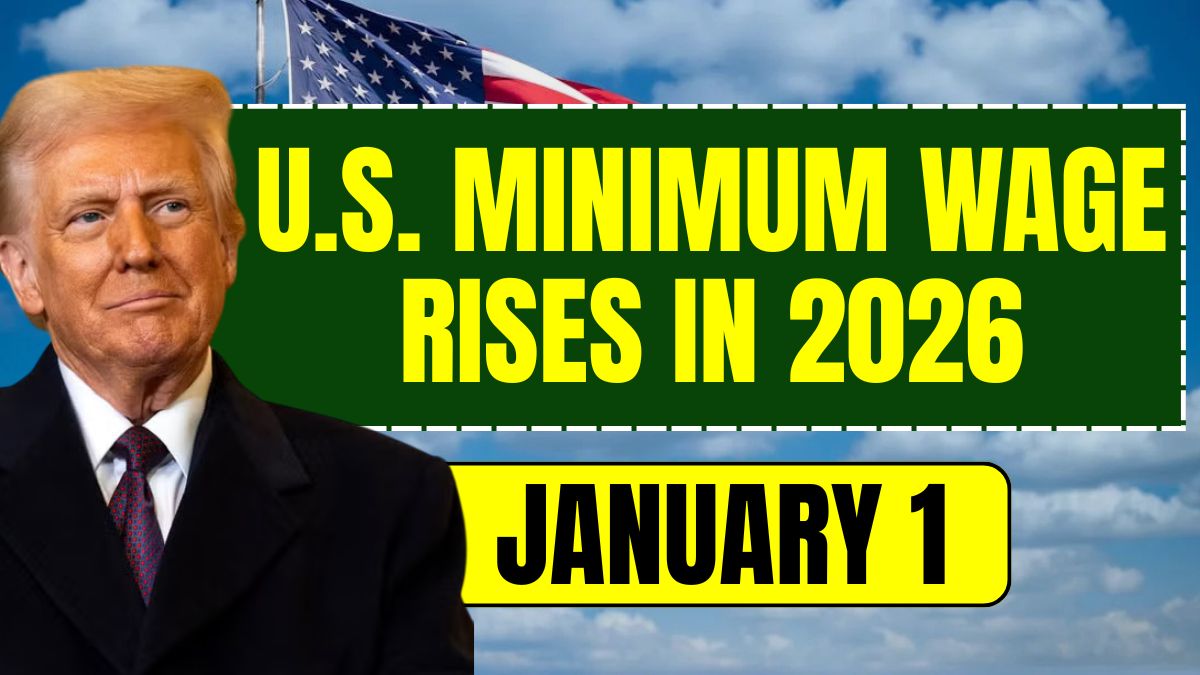
The beginning of 2026 brought a significant change for millions of American workers. The increase in the minimum wage, effective January 1, 2026, has once again brought to the forefront the debate about whether this increase will truly provide relief to ordinary people. In the US, the cost of living, including rent, healthcare, and daily necessities, is constantly rising. In this context, the minimum wage increase is not just a government decision, but a source of hope for families who struggle every month to make ends meet.
Background of the Minimum Wage in the US
The concept of a minimum wage in the US is decades old. The federal minimum wage was implemented with the objective of ensuring that no worker would have to work for wages so low that their standard of living would suffer. However, over time, it became clear that the federal minimum wage alone could not meet the needs of all states. This is why many states have set their own minimum wage rates, which are often higher than the federal rate. The 2026 increase is a result of this long struggle and ongoing demands.
Reasons for the Minimum Wage Increase in 2026
The biggest reason behind the minimum wage increase in 2026 is inflation. In recent years, the cost of food, gasoline, rent, and medical expenses has risen sharply in the US. For those with already limited incomes, managing these expenses has become extremely difficult. The government and policymakers were under constant pressure to adjust wages to maintain the purchasing power of workers. The new rates implemented from January 1, 2026, were determined keeping this pressure and economic realities in mind.
Federal Minimum Wage and State-Level Variations
An interesting aspect of the minimum wage in the US is that it is not determined solely at the federal level. Many states and cities implement different minimum wages based on their economic conditions. This was also the case in 2026. Some states automatically increased their minimum wage under pre-existing laws, while others implemented new amendments. This makes it clear that the minimum wage landscape in the US is not uniform, but varies from state to state. Impact of New Rates Effective January 1, 2026
The new hourly wage rates, effective January 1, 2026, have directly impacted the pockets of millions of workers. Those who previously worked for minimum wage have seen a slight increase in their income. While this increase may seem small to some, for families already struggling with tight budgets, this extra money can provide significant relief. This change is particularly meaningful for part-time workers and those in the service industry.
Changes in the Lives of Ordinary Workers
The biggest impact of the minimum wage increase is seen in the daily lives of ordinary workers. They can now manage their rent, utility bills, and food expenses a little better. For many workers, this increase has also provided a new opportunity to spend on their children’s education or healthcare. While it’s true that this increase doesn’t solve all problems, especially considering the rate of inflation, it is still considered a positive step.
Impact on Small Businesses
While workers are happy with this increase, small businesses face new challenges. Small restaurants, shopkeepers, and local service providers are often concerned about minimum wage increases because it increases their operating costs. In 2026, many small businesses had to adjust their budgets. Some raised prices, while others limited employee working hours. Finding this balance is not easy for every business.
Response from Large Companies and the Corporate Sector
For large companies and the corporate sector, managing the minimum wage increase is comparatively easier. They have the resources and often already pay more than the federal minimum wage. Even after the 2026 increase, many large companies have taken a positive view of it. They believe that better wages lead to increased employee satisfaction and improved work quality.
Inflation and the Reality of Real Benefits
While an increase in the minimum wage increases income, the real question is whether this increase keeps pace with inflation. Even in 2026, many economists agree that a gap persists between wage increases and inflation. In some areas where rent and the cost of living are very high, the increase in the minimum wage doesn’t seem sufficient. Nevertheless, it’s a step that at least prevents workers from falling completely behind.
What has changed for young and part-time workers?
A large number of young people and students in the US rely on part-time jobs. The 2026 minimum wage increase is significant for them as well. It allows them to better manage their educational expenses, transportation costs, and other necessities. For many young people, this increase is a small but crucial step towards becoming financially independent.
Social and political perspectives
The minimum wage has always been a political issue in the US. Some view it as a matter of social justice, while others consider it a threat to businesses. The 2026 increase has reignited this debate. Supporters argue that it will reduce income inequality, while opponents believe it could negatively impact employment. The truth likely lies somewhere in between.
The Future Direction of Minimum Wage
Following the 2026 increase, the question naturally arises: what comes next? Will the minimum wage continue to rise in the coming years, or will it plateau? Several states have already outlined plans for future increases. Experts believe that as long as inflation and the cost of living continue to rise, the discussion surrounding the minimum wage will persist.
Conclusion: Between Hope and Reality
The minimum wage increase implemented on January 1, 2026, has undoubtedly provided some relief to millions of American workers. While this increase is not a complete solution to all problems, it is a clear indication that the voices of workers are being heard. It will be interesting to see what long-term impact this change has on the American economy and society. For now, this 2026 increase offers a glimmer of hope for those who aspire to a dignified life through hard work.
FAQs
Q1. When did the U.S. minimum wage increase in 2026?
A. The increase took effect on January 1, 2026.
Q2. Does the minimum wage increase apply to all U.S. states?
A. Federal changes apply nationwide, but many states set higher minimum wages.
Q3. Why was the minimum wage raised in 2026?
A. The increase aims to address rising living costs and inflation.