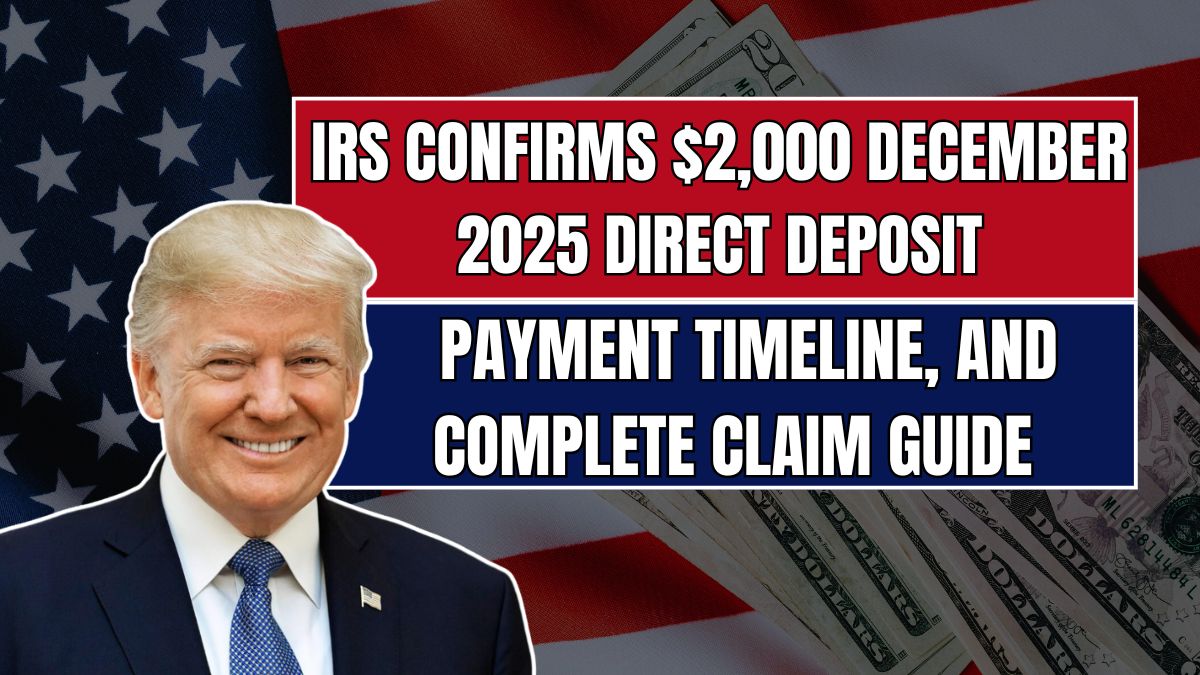
As December 2025 approaches, most American families face increased financial pressure. Holiday expenses, year-end bills, heating costs, children’s needs, and New Year preparations all add to the burden, making it difficult for households with limited income to balance their budgets. In this context, the IRS’s confirmation of a $2,000 direct deposit in December 2025 has emerged as highly welcome and reassuring news. This is not just a payment—it is a clear message from the government that it understands the financial challenges of its citizens and stands by them in times of need.
This article delves deep into this topic, explaining what this payment is, why it was announced, who is eligible, the payment timeline, how to receive it, and its impact on individuals and the economy. The goal is to provide readers with a comprehensive understanding while connecting to their everyday financial concerns.
What is the $2,000 December 2025 Direct Deposit?
The $2,000 direct deposit for December 2025 is a financial assistance program from the U.S. government. Payments will be directly deposited into the bank accounts of eligible citizens via the IRS. Direct deposit ensures that the money reaches beneficiaries safely and quickly, eliminating risks associated with lost checks or delayed payments.
This payment is one-time relief, not part of any monthly or regular payment scheme. It is designed to alleviate the financial strain caused by rising year-end expenses and the ongoing impacts of inflation, particularly for individuals and families with limited incomes.
Why Did the Government Announce This Payment?
In recent years, inflation has severely impacted Americans, increasing the cost of rent, food, gas, medicine, and healthcare. These rising expenses make it challenging for low- and middle-income families to maintain financial stability.
The government recognized the need for additional support at the end of the year. The $2,000 direct deposit in December 2025 aims to help citizens manage essential expenses, avoid debt, and start the new year with some financial relief. Moreover, when recipients spend this money, local markets and small businesses also benefit, which stimulates the broader economy.
The IRS’s Role in Distributing the Payment
While many people view the IRS as merely a tax collection agency, it also plays a critical role in implementing government relief programs. The $2,000 direct deposit is an example of this role in action.
The IRS maintains records of citizens’ income, tax filings, and bank details, ensuring that the funds reach the right people efficiently. The agency is responsible for distributing the payment in a secure, transparent, and timely manner, reducing the risk of delays or errors.
Eligibility Rules for the $2,000 Direct Deposit
Certain eligibility criteria must be met to receive this payment. The primary requirements are:
- The beneficiary must be a U.S. citizen or a legal permanent resident.
- Income level plays a crucial role, with priority given to low- and middle-income individuals.
- Citizens who filed income tax returns in the previous tax year are automatically listed in IRS records and are more likely to receive the payment.
- Individuals with incomes above a specified threshold may receive a reduced payment or may not be eligible.
Rules for Senior Citizens and Special Groups
The government understands that certain groups require additional assistance. Therefore, senior citizens, individuals with disabilities, and families with limited income may receive special priority.
Those dependent on programs like Social Security, SSDI, or SSI may also qualify for this $2,000 direct deposit if they meet other eligibility criteria. Since these groups often have fixed or limited income, this one-time payment can provide significant financial support.
Rules for Individuals Who Do Not File Taxes
Many U.S. citizens do not file taxes due to low income. The government ensures that no eligible citizen is excluded due to this reason. The IRS has established a separate process for such individuals.
These individuals need to visit the official IRS portal and submit basic information, including identity, residence, and bank details. Once verified, they will also receive the $2,000 direct deposit in December 2025.
December 2025 Payment Timeline and Dates
The IRS has confirmed that the $2,000 direct deposits will be sent during December 2025. However, the exact date may vary depending on:
- Tax filing status
- Bank processing times
- Individual circumstances
Citizens whose bank information is already on file with the IRS are likely to receive the payment first. Minor delays may occur in some cases, but the government aims to ensure that all eligible recipients receive the payment within December.
Other Payment Options Besides Direct Deposit
Although direct deposit is the preferred method, citizens without a bank account have alternative options. Payments can be sent via:
- Paper check
- Prepaid debit card
These methods may take slightly longer, but they ensure that no eligible individual is left without assistance.
How to Receive the $2,000 Payment
- If you filed taxes last year and your bank details are correct, the payment will be automatically deposited.
- If your bank details have changed or you opened a new account, you must update your information on the IRS website.
- Those who do not file taxes must complete a simple online application, submit verification documents, and await confirmation for payment issuance.
Benefits of This Payment for Citizens
This $2,000 payment provides crucial relief for many families. It can be used for:
- Paying rent and utility bills
- Buying medicines and covering healthcare expenses
- Supporting children’s education
- Meeting daily essential needs
Beyond financial relief, it also provides mental reassurance. Knowing that the government is actively supporting citizens during challenging times boosts confidence and enables better future planning.
Impact on the Local Economy
When millions of people receive and spend this payment:
- Local shops and small businesses benefit directly
- Economic activity accelerates
- Employment opportunities increase
This shows that the payment is not only an individual relief measure but also a tool for broader economic recovery.
Security and Fraud Prevention
The IRS has warned citizens to remain vigilant against:
- Suspicious calls
- Fraudulent emails or messages
The IRS never requests personal or bank information via phone or text. Any suspected fraud should be reported immediately to the official IRS website or helpline.
Conclusion
The IRS confirmation of a $2,000 direct deposit in December 2025 is a significant relief for American citizens. This payment will help alleviate financial pressure during a challenging time and make the start of the new year easier for families.
Eligible citizens should keep their information updated and monitor official IRS announcements. This program reflects the government’s commitment to economic security and stability, ensuring that citizens have the support they need during difficult times.
FAQs
1. Who is eligible for the $2,000 December 2025 direct deposit?
Eligible recipients include U.S. citizens and legal permanent residents, primarily low- and middle-income individuals, including senior citizens and those on Social Security or SSDI.
2. How will the $2,000 payment be received?
The payment will be sent via direct deposit to bank accounts on file, or through a paper check or prepaid debit card for those without bank accounts.
3. What should I do if I don’t file taxes?
Non-filers must submit their basic information on the official IRS portal for verification to receive the $2,000 payment.